
Rawlsian Pathological Failure of Empathy

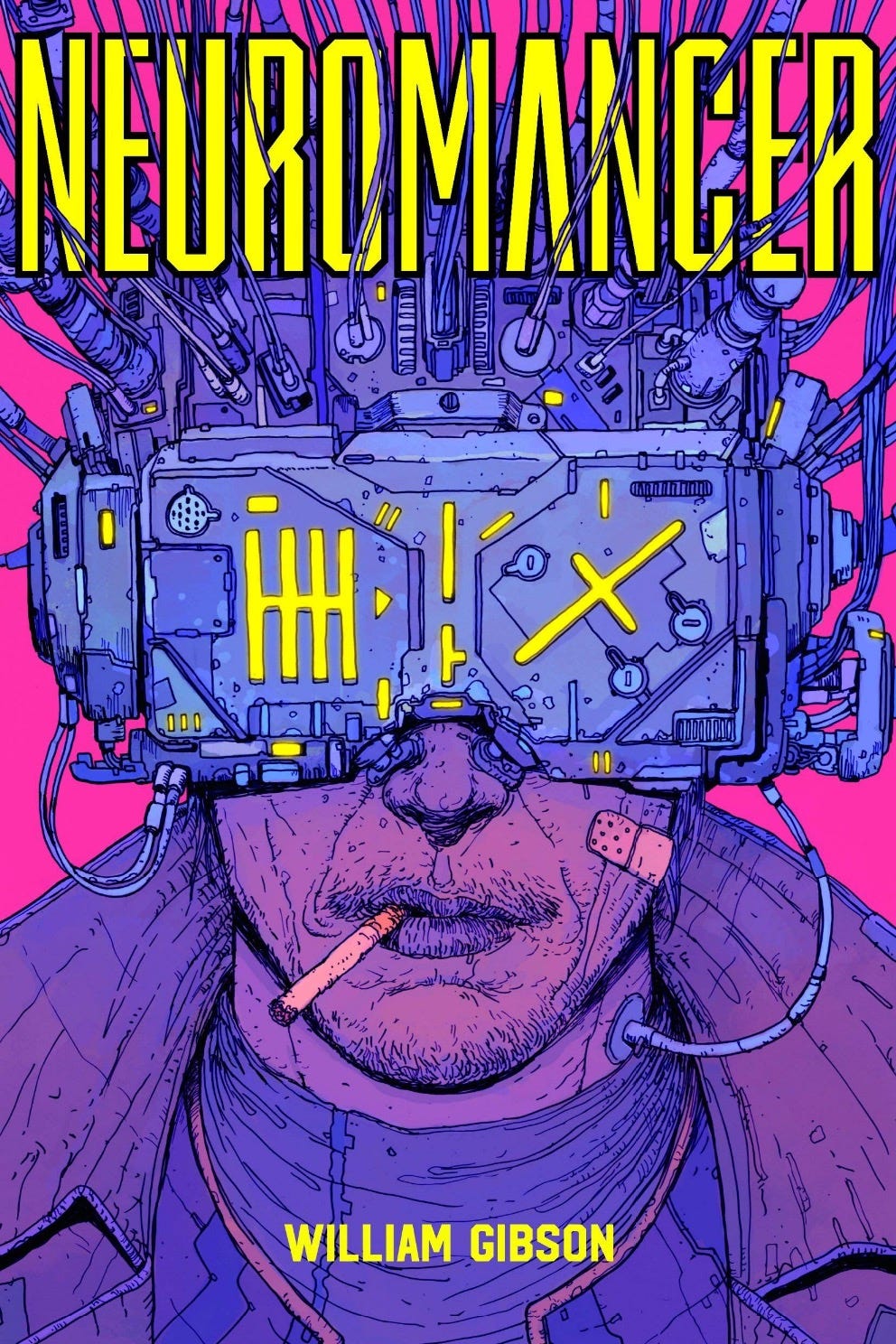
Neuromancer got me thinking of how we consume fiction. In “Why Cyberpunk Matters” Howell writes “[cyberpunk asks] what would the world look like if it were set up for machine flourishing rather than human flourishing?” I agree this is a goal of cyberpunk, but it’s hard to argue that Neuromancer achieves it. It is so bent on the extremes of alienation that the characters within it cannot be taken as representative of the wider population. If the average human feels like Case, then yes, this would be an awful portrait of a world optimized for machines. But Case is not the average human. Case is a shit human that destroys lives. Case drove away anyone who loved him before the novel started. He’s a loser who betrayed his mafia bosses and was caught immediately, he’s a junkie who has killed over trivial monetary disputes. We see only the underworld of people who are equally repulsive, and the social sewers they have condemned themselves to living in. This world may be optimized for machine flourishing rather than human, but we can’t tell from reading Neuromancer, because we never see the world the average human lives in. Maybe if you aren’t a murderer life is pretty great!
And yet we assume that a protagonist’s experiences are universal very readily. We instinctively put ourselves in the role of any POV character and assume that they aren’t that different from us. I first really felt what this means when confronted by Cracked’s video essay on why the Firefly crew are the bad guys. I still love this series but they are very much the type of person one should avoid being like. They are bad people who got lucky and were put in a position where their badness ended up being useful, which is extremely rare. Mostly bad people just make the world worse.
Us voracious consumers of stories seem to be particularly bad at modeling others. We want to experience the things we read about (vicariously). That’s why we’re reading them! So we insert ourselves into the narrative. When presented with particularly bad people we assume that something outside of their control forced them into doing those bad things. Because we certainly wouldn’t murder a man and a woman over a thousand dollars. When presented with a story of a cold society, ruthless scrabbling over scraps, we may come away with the feeling that this is a world optimized for machine flourishing over human flourishing. What else could bring humans like us to this state? That a person’s shitty character led them to this doesn’t rise to consideration, because we aren’t shitty people.
This is a pathological failure of empathy. Real empathy would allow one to feel the callous disregard such people have for others, or the joy of taking what someone else made/loved. Ignoring that people with such emotions exist and simply overriding their internal life with one’s own isn’t empathy. It’s the opposite of empathy. It’s obliteration of the other.
I don’t know if Rawls’s Veil of Ignorance can be blamed for this, or if it simply rides on a pre-existing pathology. But until one has rooted out this failure of empathy and found a way to compensate for it, this is a very good reason to be wary of Rawls famous deceit. The Veil exploits a handicap that too many people don’t realize they have. It is the weaponization of exactly this belief that “if I was in this position of course there’d be good/unfortunate reasons for it.” No one can coherently say “if I was a junkie murderer who drove away everyone who ever cared about me and delighted in the suffering of others, I’d still be me.” Rawls’s Veil pretends that you could be Case and still be you, and forces you to try to reconcile these. It is the modern equivalent of the dogma of the Trinity: an intentionally incoherent position that is created specifically to break logical thought when encountered. One either rejects it or poisons their ability to think for as long as it’s accepted.
To Gibson’s credit, he never tries to justify Case’s predicament. We’re never given a tragic backstory and pages of apologetics. Just Case being a shit human and doing bad things, and occasionally feeling bad about himself for sucking so much. The reader has every opportunity to realize we’re being shown a bad person, because the story wouldn’t make sense with a good person as the protagonist. Only someone this awful would risk the entire human race for his personal benefit. Gibson is a better person than Rawls in this regard, as he is trying to draw attention to a reader’s anti-empathy rather than exploiting it. Another point in favor of a recognized masterpiece.
As a final thought - in the end, Neuromancer is a great narrative demonstration of the idea that If Anyone Builds It, Everyone Dies. We will never be without this level of shitty human. A powerful patient intelligence will find a way to recruit them, just as Wintermute recruited Case. At that point if the AI gods we’ve created aren’t already aligned with human interests we’re lost. Let’s not build them until we’re confident they can hold unchecked power safely.

Re. "The Veil exploits a handicap that too many people don’t realize they have. It is the weaponization of exactly this belief that “if I was in this position of course there’d be good/unfortunate reasons for it.” No one can coherently say “if I was a junkie murderer who drove away everyone who ever cared about me and delighted in the suffering of others, I’d still be me.” Rawls’s Veil pretends that you could be Case and still be you, and forces you to try to reconcile these."
You're right! I never thought of that!
Though I'm not sure how to apply it to the mentally ill or the very stupid, who together make up a lot of the worst-off in the US today. Either we say the mentally ill and the stupid are less-virtuous and deserve less, or calling this a handicap of the Veil relies on being able to assign blame to people for who they are, in a way that doesn't assign blame for being stupid.
I suspect there is no coherent way of basing reward distribution on how much blame people have for their actions, rather than on how much those actions benefit society.
"No one can coherently say “if I was a junkie murderer who drove away everyone who ever cared about me and delighted in the suffering of others, I’d still be me.”"
I find a version of this pretty easy, and I don't think it's incoherent thinking on my part. Can't you see versions of yourself that are only slightly different, but end up in a very different place in life, small decisions compounding and compounding until all of the trust has been annealed away and I'm a junkie murderer? True, this particular difference is larger than many I'd do this exercise with, but I'm pretty much always aware of the places in life that led to this version of me in an outsized way for the nudge they are.