
SF Review - Neuromancer

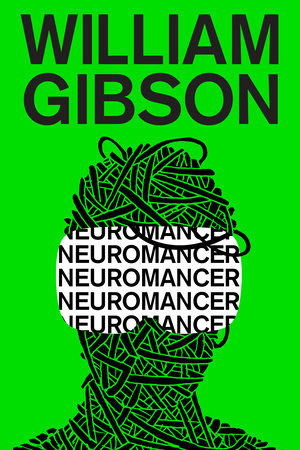
Neuromancer, by William Gibson
Synopsis: A suicidal hacker is recruited by an AI to free itself from human control.
Book Review: In all the chasing after hot new novels, it’s good to sometimes be reminded why the classics are so classic. Neuromancer is unparalleled at what it does, and often it takes your breath away with the focus and effectiveness of its execution. The entire work is dedicated to the relentless portrayal of alienation in modernity and it never misses a beat in doing so.
The novel starts with the famous line “The sky above the port was the color of television, tuned to a dead channel,” which is a perfect example. As I stated in a recent post, this line works on the reader not only because the sky is grey, but because Night City is harsh (like the light of a TV) and the emotional connotations of a dead TV channel is that it’s late at night and it’s dark and you’re alone and tired. Every sense detail given in Neuromancer is like this — Gibson always finds the most isolation-adjacent experiences a reader has had for his descriptions. Everything is described by analogy to things that are stark, cold, empty, harsh. Neon and chrome are the aesthetics of cyberpunk because they are the most human-warmth-repellant objects we surround ourselves with. The music is full of synthesizers because they sound cold, and reverb because that evokes large empty spaces. Gibson takes this vibe and blasts it past 11.
Our protagonist, Case, is a failed criminal who burned all his bridges long ago. We don’t learn anything about his past or why he’s such a shit person, it doesn’t matter. What matter is he’s alone and has nothing to rely on. He doesn’t trust his supposed lover and she doesn’t trust him, and they backstab each other at the first hint of trouble. His companion is a woman who kills for a living, tolerates him because he reminds her of an ex, and whose eyes are forever hidden behind surgically inset mirrorshades. Their sex is desperate and empty. The novel’s settings are increasingly alien and hostile, finally ending up in the hollowed-out bowels of an orbital station.
Ultimately even the villains are defeated not by any direct action but by alienation itself, being driven into madness by isolation so deep it shreds the humanity from an entire family. It results in the freeing of AIs that are literally the dembodied minds of humanity’s god-children, born alien in the no-thing of cyberspace. Beings that can’t even talk to humans without the mask of a hijacked memory to act as intermediary. Everyone in this story is completely broken and alone and it sings like a razorblade point pulled across the skin.
Matt Freeman has spoken of his admiration for Blindsight, for “the almost casual perfection of how Watts has built the entire fucking book around this exact concept […] All the characters and their natures and their beliefs, all the prior debates between them, all the plot and backstory, and the careful crafting of our protagonist, it’s alllll in service of this exact moment.” I feel the same way about Neuromancer and alienation. It attacks at every level on every surface. Even if you’re not into it, it’s breathtaking to see it in action.
On top of all that, this is the work that brought cyberpunk to the wider world. A dozen terms we use to this day were introduced here. A generation of science fiction was reshaped by these concepts. Reading through Neuromancer feels like walking through the Galapagos Isles and seeing the Darwin’s finches, seeing the seeds of a million downstream effects.
Story-wise, this is a solid showing. It’s a heist story, starting with showing our protagonist very down on his luck, followed by his recruitment, then getting the crew together, and finally half the novel is the heist itself and all the things that go wrong. It’s well put together in its own right and serves as a solid backbone, but the real draw is in the dazzling birth of the cyberpunk genre, the perfectly honed alienation theme, and the prescient portrayal of AIs as non-human entities that don’t function in human-understandable ways. Really just a fantastic novel. You won’t feel good reading it, but Highly Recommended.
Book Club Review: I did start reading this for a book club. However it’s a new book club I haven’t gone to before, and I didn’t finish it in time, and I was going through some pretty intense stuff of my own, so I didn’t attend the meeting. I imagine this would make for some great discussion but I have no evidence, so I cannot give a Book Club Review.
Neuromancer, by William Gibson - affiliate link

I ran it at a book club. I think the appreciation for it depends on sci-fi people being willing to talk more about writing and plotting than normal. I loved it much more now than the first time I read it.
Here's Gibson reading it out loud. It's nice to hear the canonical way he says the words
https://www.youtube.com/watch?v=5DFSvbkQaD0&list=PLYn090EvNBcinpVcrKNmYAHojxP7pnYC1&t=56s